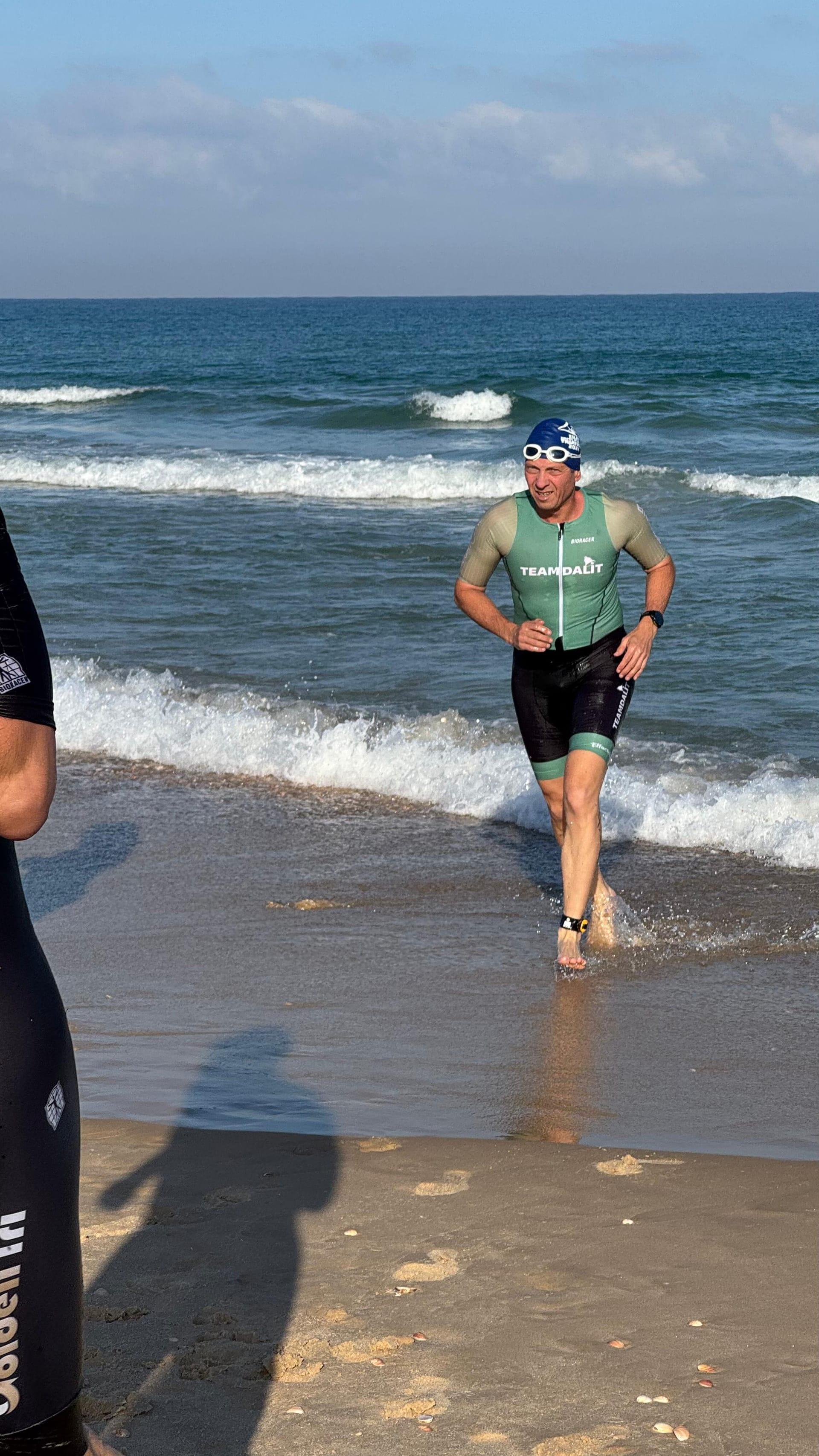
In triathlon, races are won between disciplines — not only inside them. The transitions, called T1 (swim → bike) and T2 (bike → run), are the fourth and most often neglected sport. Trained properly, they can save you a full minute over an Olympic distance, without your watts ever going up.
Why transitions matter
Every second you spend in transition is a second you could have used on the bike or the run. More importantly, a chaotic transition raises your heart rate, your stress, and ruins the rhythm of the next discipline. A clean transition is calm, planned, and almost boring — and that's exactly what we're after.
T1 — getting out of the water and onto the bike
- Unzip the wetsuit while running from the water to your spot. Don't wait.
- Goggles + cap stay on until you reach your bike — never lose them on the way.
- Lay your gear out the same way every time: helmet on the handlebar (open), glasses inside the helmet, shoes clipped to the pedals if you race that style.
- Helmet first, always. You cannot leave T1 without a buckled helmet — get this engrained.
T2 — getting off the bike and into the run
- Unfasten your shoes 200 m before the dismount line. One leg first, then the other.
- Run with the bike, not next to it. Hand on the saddle, eyes up.
- Rack the bike, helmet off, shoes on, go. Anything else (gels, sunglasses) you should already have decided beforehand.
How we train this in Team Dalit
Once a month we run a transition drill session: a real T1 and T2 set up in the parking lot, 4 to 6 reps, video review, and then a brick (bike + run) to feel the legs. We measure the time and you compete against your own record from last month. It's simple, it's playful, and the gains are massive.
Three rules that change everything
- Always lay out your gear the same way.
- Never sit down in transition.
- The first 200 m of the next discipline is calm — speed comes after.
See you at the next session. If you want a personal transition review, message me — I'll video your next race for you.